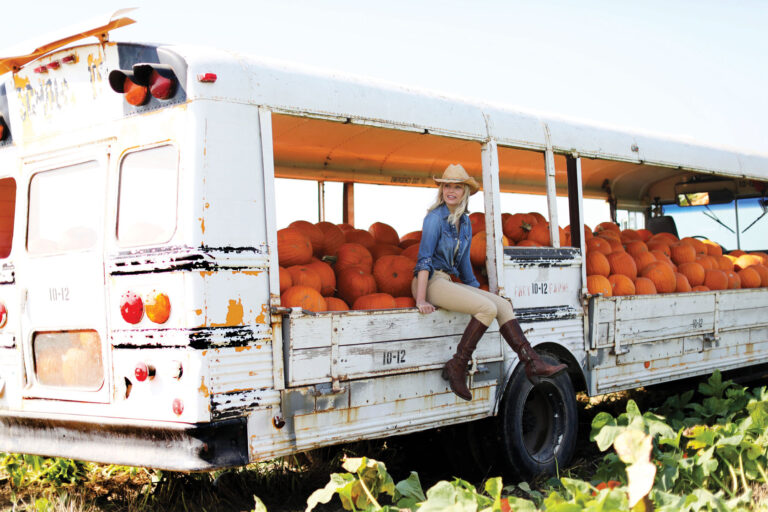

Fall harvest is a busy time. Farmers must move slowly with large equipment, but public roads are often the only way to get from point A to point B. Navigating roadways can be dangerous for farm equipment operators and drivers who follow them.
Hundreds of farmers and agricultural workers are injured or die from work-related accidents each year. Transportation incidents, which include tractor overturns, are often the leading cause of death.
Tips for drivers
When you find yourself following or passing large farm equipment, take a deep breath and do your part to keep roads safer.
Before heading out, whether it’s your daily commute to work or you’re visiting family, think about how long it will take to get to your destination and add extra time for busy farm roads.
Give farmers plenty of room on the road. If oncoming farm equipment takes up the entire road, pull over and wait for them to pass. If you need to pass farm equipment, be patient and wait until you are in a passing zone and there is clear visibility around the equipment. Keep an eye out for oncoming vehicles.
Go slow. Farm operators often stop or turn into fields, making wide turns, so give them plenty of time and room. Do not assume that a farmer can move over in narrow areas — it is not always possible. Honk or motion when passing farmers; their equipment is big and noisy and they may not see you or even know you are there.
Do not tailgate; farmers often cannot see you. And do not pass and then slow suddenly in front of equipment pulling implements or farm trucks full of grain. They cannot stop quickly.
Tips for farmers
Make sure all flashers and lights are operational before the workday begins. On roadways, drive as far to the right side of the road as possible, especially when going around a curve.
Avoid traveling during busy traffic times, such as work commute hours. Pull over and allow vehicles to pass when traffic builds up behind you.
Take care at railroad crossings and be mindful of the height and width of machinery, watching power lines, bridges and other hazards. Along with turn signals, use hand signals. Stay rested, and do not drive when you are too tired or hungry.
Tips for everyone
If you are involved in an accident with electric equipment, such as a utility pole or power lines, the safest place is inside your vehicle or cab. Here’s what you need to do: Stay inside your vehicle, call 911 to report the downed lines or damaged equipment, remain calm, wait for the utility crew to deenergize the equipment, and do not get out until someone from the utility says it is safe to do so.
If you must get out of the vehicle because it is on fire, cross your arms over your chest and make a clean, solid jump out, landing on both feet, and intentionally hop with your feet together as far away as you can. If you are unable to hop, shuffle with your feet close together.
When you exit, do not touch the vehicle and the ground at the same time. You could become electricity’s path to ground from touch potential (touching something energized and the ground at the same time).
Hopping helps avoid step potential (placing each foot at a different voltage). When electricity escapes into the ground, it is likened to ripples in a pond, with each ripple representing a different voltage.
If you are a bystander, do not approach. Downed lines and other damaged equipment can energize the ground and nearby objects. Never go near a downed power line or try to move it with an object. Electricity can jump from a wire or object to you to find the quickest path to ground.
Know that a power line doesn’t have to be arcing or sparking to be energized. For information about safety around electricity, visit SafeElectricity.org.