

Did you know one in 26 people will develop epilepsy in their lifetime and one in 10 will have a seizure? Despite its prevalence, epilepsy remains vastly misunderstood and is often isolating for those impacted by it.
This is where organizations like Epilepsy Advocacy Network (EAN) come in. With a mission to promote community education and awareness, self-advocacy and empowerment, and access to proper care, EAN serves 60 counties in northwest and central Illinois.
Educating yourself about epilepsy helps build communities that are more supportive of those impacted by it. So, what exactly is a seizure, and what is epilepsy? A seizure is an electrical discharge in the brain that can impact movement, sensation, behavior and/or awareness. Epilepsy is a disorder involving recurring seizures. Can you correctly identify some facts and myths about epilepsy?
Fact or myth?
There are more than 20 types of seizures.
This is a fact. Many people recognize only tonic-clonic seizures, previously called grand mal. These are convulsive seizures that often begin with a sudden loss of consciousness, a fall and jerking of the limbs. There are many other types of seizures, which can involve loss of consciousness, vary greatly in duration, and affect behavior rather than body movement.
If you see someone having a seizure, you should put something in their mouth.
This is a myth. A person cannot swallow their tongue while having a seizure. If you see someone having a convulsive seizure, it is important to stay calm, time the seizure, turn the person on their side, and ensure there is nothing on or around them that could injure them.
A seizure is always a medical emergency.
This is a myth. Most seizures are not emergencies and can be managed without a call to 911 or a trip to the hospital. A seizure is an emergency if it is a first-time seizure, or if it looks different or goes longer than the person’s typical seizures. Other emergency situations are if a seizure occurs in water or if the person is pregnant.
What you can do
We encourage you to learn more. All EAN services are free to access. Educational services for the community include Seizure Recognition and Response training, which can be offered at schools, organizations or for any other interested groups, Epilepsy 101 training, and awareness events to bring people together to build support for those with epilepsy.
Services for people with epilepsy and their caregivers include:
- Case management, goal setting and referrals to services.
- Referral and assistance for specialty care.
- Support groups, both in-person and virtual.
- Programs helping with seizure management, stress reduction and memory concerns.
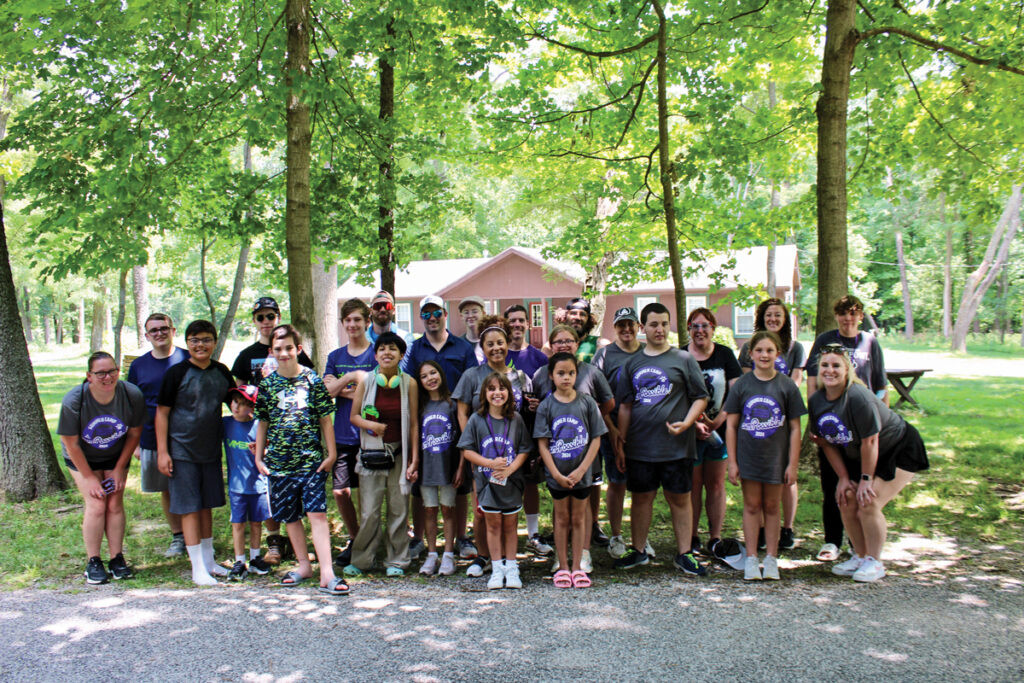
- Summer camp for children and teens with epilepsy.
- Assistance creating an action plan and advocating for accommodations at school or work.
- Support for those experiencing financial hardship who need assistance obtaining medication or transportation.
- Access to safety devices, including seizure detection watches, anti-suffocation pillows, cooling vests and more.
Contact EAN to get connected. If you are in the Chicago area or in southern Illinois, there are similar organizations you can contact for epilepsy services, including Epilepsy Foundation of Greater Chicago and Epilepsy Foundation Greater Southern Illinois.
LEARN MORE
Epilepsy Advocacy Network
815-846-0881
info@epilepsyadvocacynetwork.org
epilepsyadvocacynetwork.org
Epilepsy Foundation of Greater Chicago
312-939-8622
info@epilepsychicago.org
epilepsychicago.org
Epilepsy Foundation Greater Southern Illinois
618-236-2181
trudyb@epilepsygsil.org
efgreatersil.org