
Does anyone remember when they learned pickles are just preserved cucumbers? I don’t recall my specific moment of cucumber epiphany, but it sure is fun to tell kids their favorite pickled snack is actually the cucumber they turn their nose up to when it is on their plate.
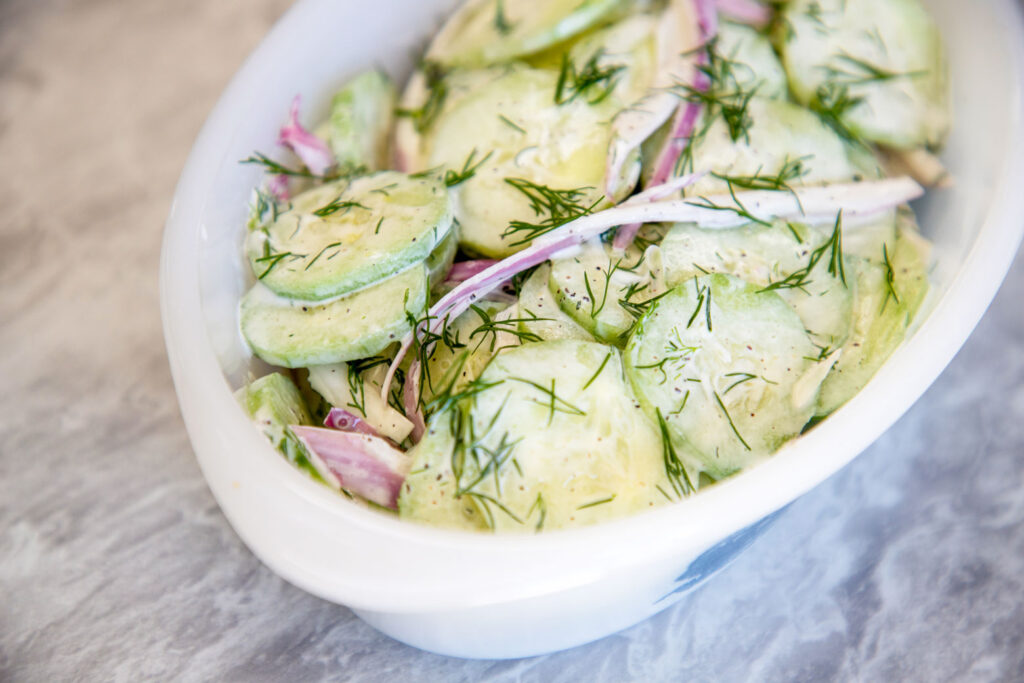
Most gardeners’ exposure to cucumbers begins with growing them to eat raw in salads or on sandwiches. Depending on your culinary destination, you can either slice cucumbers (raw) or pickle them.
Cucumbers belong to the cucurbit family, which also includes squash, pumpkins and melons. They are warm-season crops and will grow best during the summer months. While cucurbits as a group are often referred to as vining crops, there are cucumber varieties that are bush-type and suited to smaller garden spaces. However, many delicious cucumbers are vining types, which put on substantial growth and require some type of trellising system.
Some cucumbers are marketed as burpless. These tend to have few to no seeds, and their skin is typically thinner. Some individuals are thought to react to cucurbitacin, a compound found in the seeds and skin, resulting in excess gas and “burping” after eating the fruits.
Cucumbers are usually started by planting seeds directly in the garden, though you can also start the seeds indoors 3 to 4 weeks before planting. Plant after the danger of frost has passed and the soil has warmed in the spring. Warm soil is necessary for the germination of cucumber seeds and proper plant growth. With ample soil moisture, cucumbers thrive in warm summer weather. A second planting for fall harvest may be done in mid- to late-summer.
Cucumber plants have shallow roots and require consistent soil moisture throughout the growing season, especially during flowering and fruit development. For best yields, incorporate compost or well-rotted manure before planting.
Side-dress with nitrogen fertilizer when the plants begin to vine. In small gardens, the vines may be trained on a trellis or fence. When the long, burpless varieties are supported, the cucumbers hang free and develop straight fruits. Winds whipping the plants can make vertical training impractical, however. Wire cages can also be used to support the plants. Avoid working with plants when they are wet to reduce the spread of plant diseases.
When harvesting, pickled cucumber types should be picked frequently (often daily) so they can retain an adequate size for pickling. Slicing cucumbers can be harvested as needed. Often, it is recommended to pick slicing cucumbers when they are under 8 inches long. Refer to your seed packet for specific variety recommendations.
Leaving cucumbers on the plant too long produces tough, bitter fruit. Mature cucumbers turn yellow in color. Make sure to remove overripe fruit, as they can significantly reduce further production as the plant shifts energy toward seed development.
Cucumber plants can put on a hefty yield that may cause you to swear off ever eating another cucumber. But by the time we make our way through winter and back into spring, you will likely again have a craving for cucumbers. It may be wise to stock up on cucumber recipes. Pickles or cucumber sandwiches, anyone?