
Nuclear energy often conjures images from TV and movies, such as towering cooling structures, glowing green substances and frantic control rooms. In reality, modern nuclear power plants are far removed from these portrayals.
Today’s nuclear facilities operate more like high-tech industrial campuses — clean, continuously monitored, extremely secure and designed with multiple, overlapping layers of safety.
In the U.S., nuclear plants are among the most heavily regulated facilities of any kind, with a dense framework of state and federal oversight governing reactor licensing, fuel handling, plant maintenance, material disposal and emergency preparedness to ensure that nuclear plants operate safely and responsibly.
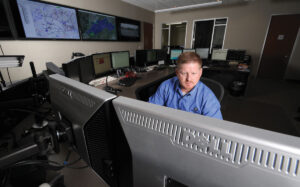
Safe operation begins in the control room. Plant operators must pass demanding written and operational examinations administered by the U.S. Nuclear Regulatory Commission before they are allowed to work — and training doesn’t stop once operators are licensed.
Personnel are regularly tested on routine plant operations and on rare but high-consequence emergency scenarios. As nuclear facilities modernize, operators are also trained using advanced digital systems that are replacing older equipment. These upgrades improve automation, diagnostics and situational awareness.
Safety extends far beyond the control room. Organization and discipline define how nuclear plants are designed and run. Facilities have clearly established security perimeters, controlled access points and rigorous maintenance programs to ensure reliability while protecting workers and surrounding communities. Critical components are housed in reinforced concrete and steel structures and are accessible only to essential personnel.
Reactor technology has also become safer as decades of experience have driven innovation. One of the most significant advances is the increased use of “passive safety” systems, built-in safety features that work automatically.
Earlier reactors relied heavily on pumps, motors and operator intervention to perform critical functions like circulating cooling water. While modern designs still include active systems, they also integrate passive features that do not require external power or immediate human action. Instead, natural forces such as gravity, pressure and convection keep the reactor stable and cooled if disruptions occur. Passive safety increases resilience during grid outages and extreme weather events.
Another major area of innovation is the development of small modular reactors (SMRs) and microreactors. These reactors are far smaller than traditional nuclear plants and are designed to be manufactured in factories and assembled onsite. Existing U.S. nuclear plants typically produce between 600 and 1,500 megawatts (MW).
By comparison, SMRs are expected to generate about 70 to 350 MW, while microreactors would produce just 1 to 20 MW. The smaller size and standardized designs could shorten construction timelines and allow capacity to be added as energy demand grows.
SMRs and microreactors remain early-stage technologies. Most developers are in the prototype phase, with no commercial deployments yet operating. Widespread adoption is unlikely before the end of the decade, but interest remains strong.
In a time of rapid electric demand growth, nuclear power offers zero-carbon baseload power, a potentially valuable attribute as fossil fuel plants retire and intermittent renewable resources expand. As the energy landscape shifts, nuclear energy may play an important role for cooperatives seeking dependable, long-term generation options.
Electric co-ops are tracking these developments in their long-term planning. For co-ops and their consumer-members, nuclear energy can provide reliable, cost-effective, carbon-free electricity.
Photo courtesy of GE. For illustrative purposes only.