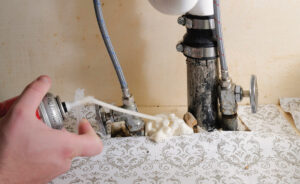

If you live in a home with a forced air furnace, the biggest energy waster may be out of sight. Improve your home’s efficiency and comfort by repairing and sealing ductwork.
Around 20% to 30% of the air you pay to heat or cool is lost through leaks, holes or poorly installed ductwork in the average home, according to the U.S. Environmental Protection Agency. This results in wasted energy and uncomfortable homes, regardless of the thermostat setting.
Properly sealing ducts can reduce energy waste. If you have a room that is cold in winter and hot in summer, the culprit might be a leaky or disconnected duct.
Duct sealing also helps with indoor air quality. Leaky return ducts can pull air from the spaces they run through, such as attics and crawl spaces. You don’t want to breathe in dirt, dust and insulation. If you have gas appliances, such as a gas water heater, dryer or furnace, leaky return ducts can inadvertently cause backdraft, introducing combustion gases back into the home instead of outdoors where they belong.
You can seal ducts yourself or hire a professional. For the do-it-yourself approach, start with a visual inspection to determine your duct type. Most homes have flexible or metal ducts.
Metal ductwork comes in various shapes and sizes, including round and rectangular, and with various options for turns and connections. Ducts should be insulated when they run through unconditioned spaces, such as crawl spaces, attics and garages. If your metal ducts are insulated, you must remove the insulation to properly seal them, then reinsulate.
Flexible ducts typically have an inner and outer layer with insulation in between. The inner layer is made of bendable plastic reinforced with wire, like a stretched-out Slinky covered in plastic. The outer layer holds the insulation in place. The inner liner in flexible ducts can become brittle over time, cracking easily and causing leaks. If your inner liner is in bad shape, replace the flexible duct.
Check for any obvious disconnections, gaps, extra bends or sagging ducts. Improve airflow by using short, straight, taut runs. Avoid sags and excess turns.
Metal ductwork should be fastened together at each joint using sheet metal screws. Make sure your ducts are properly supported to keep the joints from separating over time. For flexible ducts, use Panduit straps. These are heavy-duty nylon zip ties that offer long-term durability and a tensioning tool specifically designed to tighten them.
When it comes to sealing ducts, use products designed for the job. Seal every joint and seam using duct-sealing mastic — a thick paste that can be applied with a paintbrush or gloved hand. When it dries, mastic creates a flexible, airtight seal, eliminating duct leakage.
Use mesh tape to bridge larger gaps before applying mastic. Remove register covers inside the home to seal the joints and seams there. You also want a good seal where the duct meets drywall or flooring.
In easier-to-reach areas, you can opt to use UL-listed foil-backed tape designed for ductwork. Do not use duct tape. Fluctuations in temperature cause the adhesive to fail.
Duct sealing is messy, so make sure to protect yourself and your home. Use drop cloths to protect flooring. Metal tape and the edges of metal ducts are sharp, so put on coated work or garden gloves underneath nitrile or latex disposable gloves. To protect your arms, wear a long-sleeved shirt tucked into your gloves.
After air sealing, have an HVAC professional test the airflow during your next annual maintenance visit.
If you don’t feel comfortable getting your hands dirty, hire a professional. Most companies that install ductwork or heating and cooling systems can also seal ducts.