PHOTO COURTESY OF JAMIE BIRCHFIELD PHOTOGRAPHY
In a small office in the backyard of Bev Shofstall’s Carterville home, a young woman walks in with a not-yet-weaned, orphaned raccoon. As Bev leans in to take a look, the raccoon appears more curious than frightened. Bev smiles, pronounces it healthy, and predicts it will be back in the wild in a few months.
Just outside the office, two injured box turtles are being nursed back to health, and beyond the turtles, scattered around nearly 3 acres of Bev’s heavily wooded property, a couple of volunteers care for orphaned or injured animals brought in from as far as 90 miles away.
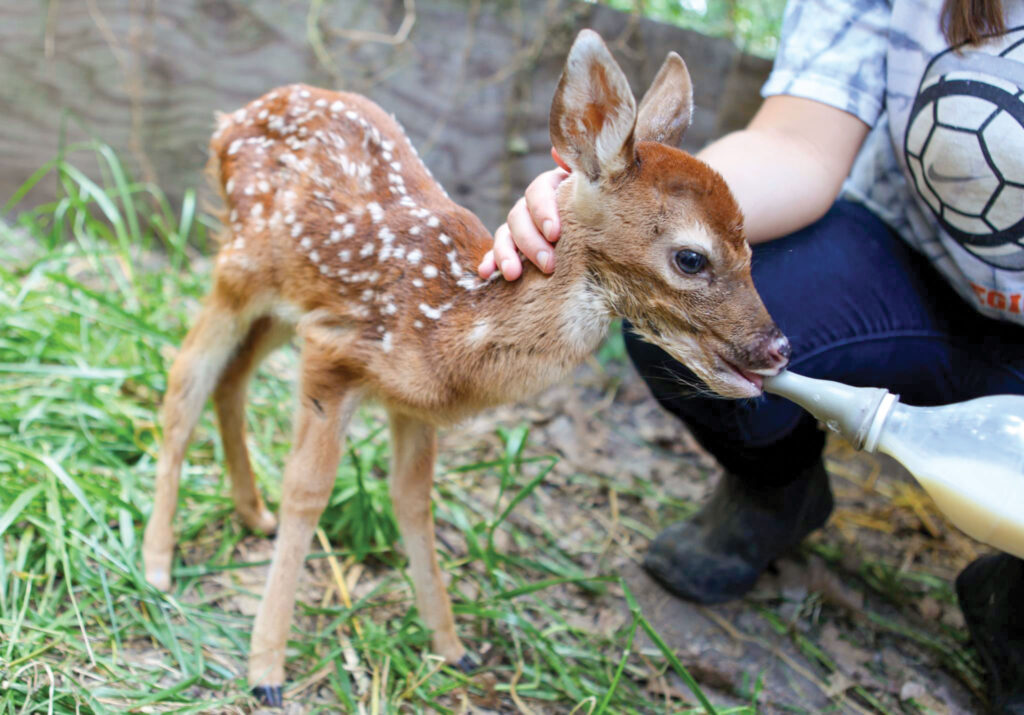
These animals include bobcats, bald eagles, young deer, raccoons, possums, red foxes, rabbits, six species of hawks, groundhogs and three species of owls. A large stock tank holds the occasional otter or weasel. At the height of the birthing season, she and her volunteers usually care for around 125 animals simultaneously.
Bev has always loved animals. “I was a farm girl in Minnesota,” she says. “It wasn’t unusual for us to have a baby pig or a lamb behind the stove, bringing them in from the cold weather.” Years later, working as a technician in a veterinarian clinic, she helped treat injured wild animals that people brought in, but sometimes the clinic was too busy to care for them.
That broke Bev’s heart and she began taking them home, starting with a hawk, then a litter of possums. By year five, she was taking care of around 150 animals in the back of her property. She decided to quit her job at the veterinarian clinic, where she’d worked for 20 years, to care for the animals full-time.
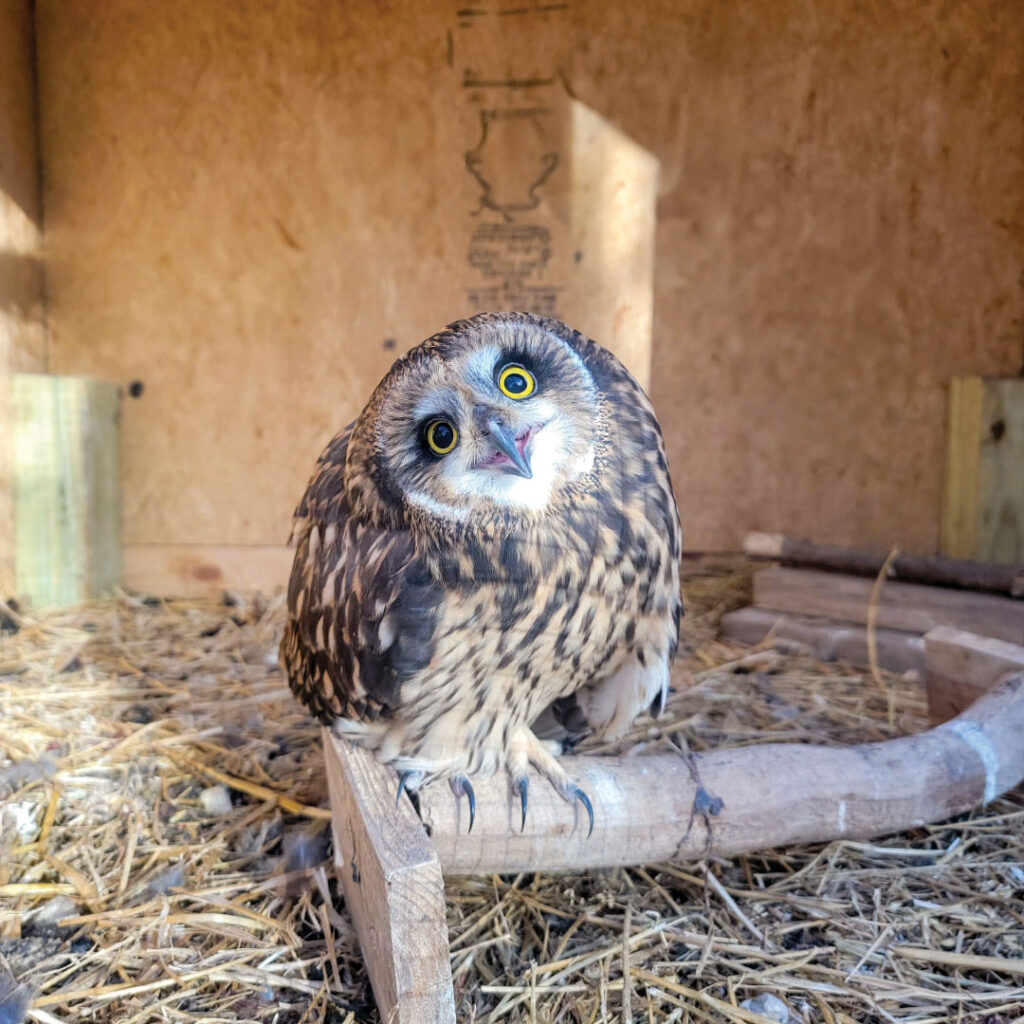
PHOTO COURTESY OF FREE AGAIN WILDLIFE REHABILITATION
Free Again, Bev’s nonprofit rehabilitation center located in Carterville on Egyptian Electric Cooperative Association lines, has helped wildlife since 1984. Approximately 600 animals are dropped off every year during spring and summer.
The center receives no financial help from any government agency. With the aid of donations from the public, Bev pays for X-rays, food, medical supplies and material for enclosures, while a couple of local veterinarians donate their facilities and time whenever they can.
Around 15 volunteers regularly help out — one or two per day — and her husband Jim pitches in by repairing structures and feeding the birds in the evening, but the bulk of the work falls on Bev.
With the aid of a cane and moving slowly, she works seven days a week and 12 to 14 hours a day during the spring and summer, when the bulk of injured and orphaned animals are brought in.
Bev cautions that many animals that appear to be orphaned are not. “The mother is simply away getting food,” she says. Nor is it too late to return an animal if you’ve already captured it.
“People worry that once they’ve touched a baby animal, the mother will detect a human smell and abandon the babies,” she explains, “but that isn’t true. Deer pick up human odor all the time. They drink out of ponds that humans have swum in and eat grass we’ve walked on. Plus, the maternal instinct is extremely strong … mothers almost never abandon their young.”
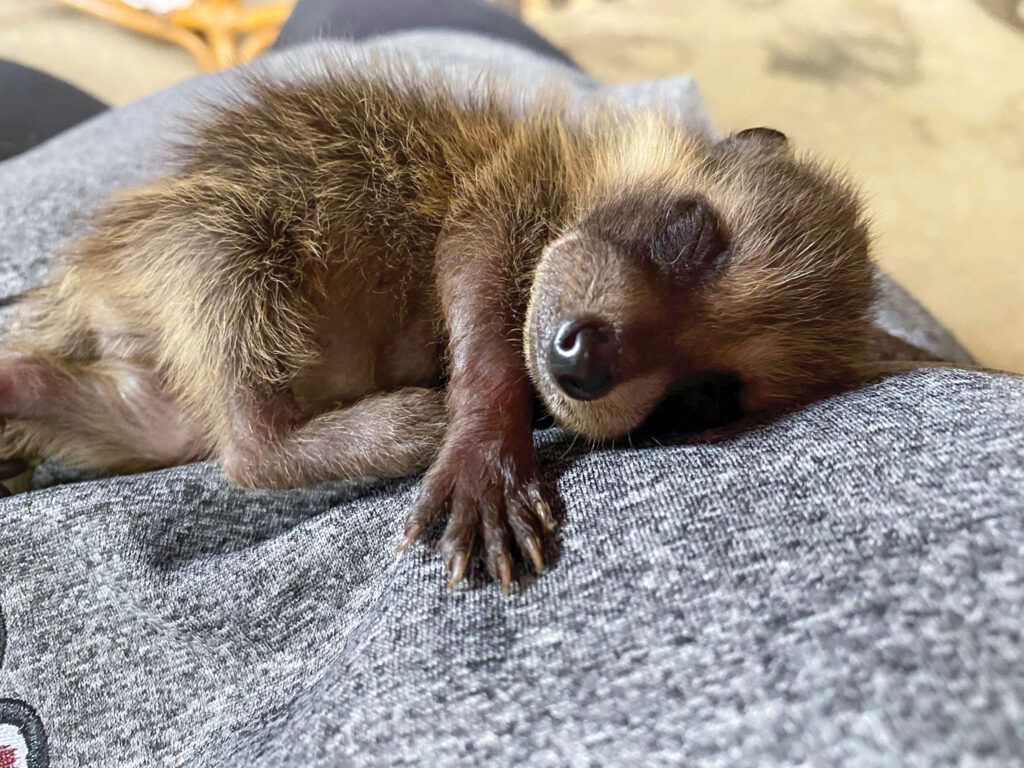
PHOTO COURTESY OF SECOND NATURE WILDLIFE REHABILITATION
Baby animals do get orphaned, though. Young squirrels may lose their mothers when people lob off branches or cut down trees during nesting season. Domestic animals chase and kill many types of wild animals. They can also be injured in traps or run over by cars.
By removing trees or limbs in autumn or early winter (rather than spring and summer’s nesting season), training your pets to respond to your commands to heel and sit when another animal crosses its path, keeping your cats at home at night, and simply driving more slowly and attentively, people could help reduce the number of wild animals injured each day, softening the workload for Bev and other volunteers.
Bev says one of the most rewarding parts of her work is seeing an animal released back into the wild. It is, however, also one of the most challenging aspects. For one thing, it’s illegal to release a wild animal on public property, so Bev must coordinate an animal’s release with owners of private property.
Complicating the situation, only two or three animals can be released in a particular area at one time due to its “caring capacity” — a land’s ability to support a certain number of animals — and an animal needs to be released near where it was originally found.
Staying alive is a challenge for any animal in the wild, but returning to its original territory gives it a better chance of survival as it knows the location of food sources and has established something of a truce with competitors.
About 30 miles from Free Again, in Thompsonville, Pam Sundeen runs another wildlife rehab center called Second Nature, which is located on SouthEastern Illinois Electric Cooperative lines.
Like Bev, Pam has always loved animals. She received her first horse when she was 2 years old, and she remembers always having bunnies around the house. In high school, she raised her first raccoon, and it’s the animal she now loves best. “Raccoons are extremely smart and very affectionate,” she says.
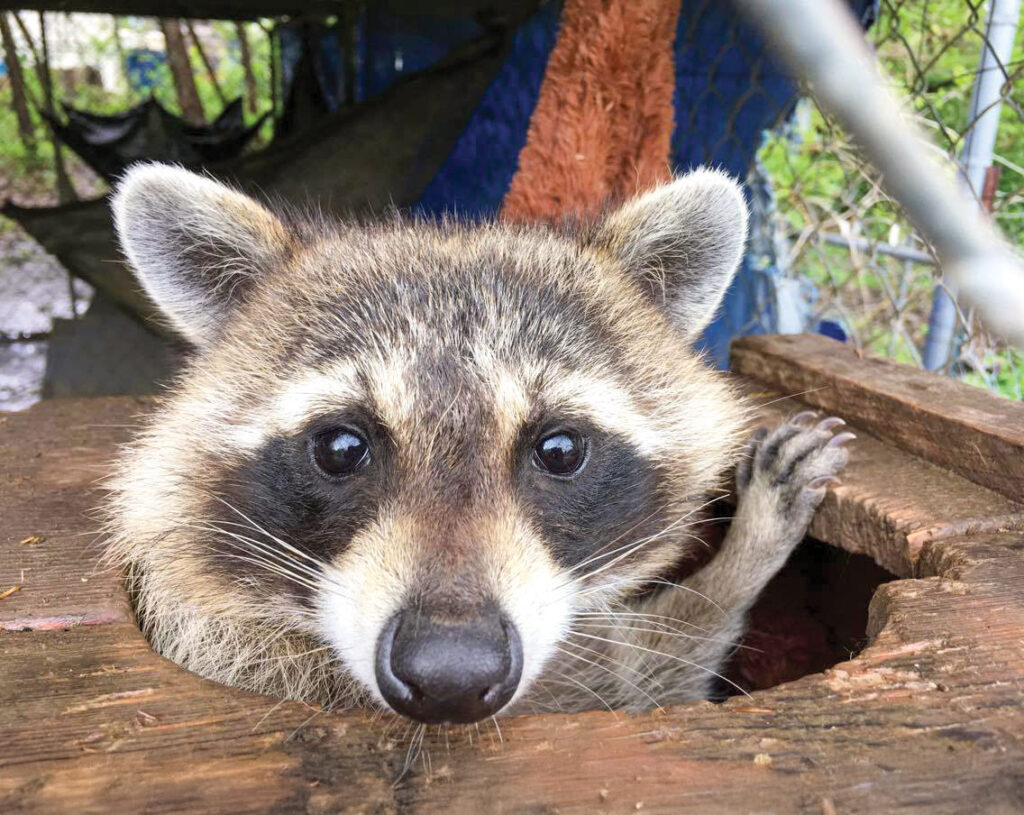
PHOTO COURTESY OF SECOND NATURE WILDLIFE REHABILITATION
At any given time, Pam cares for about 50 animals with the help of some friends, so she has to assess over the phone whether she can accept additional animals. If not, she refers people to another wildlife center, often Free Again. In addition to the heavy workload of animal rehab, Pam focuses on education. She speaks at libraries, Boy and Girl Scout events, and she opens up her center for field trips, hoping children will connect with and develop compassion for wild animals.
During events, Pam walks the children around the premises and tells them how the animals were injured, what kind of food each animal eats, and how and when she expects to release them back into the wild.
Each enclosure contains a pool and den house, as well as a tire or swing for play. Because she can’t risk a child being bitten, and because she wants to retain an animal’s natural fear of humans, she doesn’t allow children to touch any of the animals. To make up for that, she developed a petting area.
There, she keeps pygmy goats named Brownie, Grace and Mitzi, a 200-pound potbelly pig which lolls around in a big mudhole, and Merlin the donkey, who knows its name and sticks its head out of the lean-to when she calls him.
Pam feels passionate about caring for wild animals that have been injured or orphaned. While she would like a perfect world where animals never have to be brought in for rehab, she “would miss taking care of them.”
She is also nearly fearless when it comes to the creatures. A baby possum hisses and bares its teeth when she pulls it from its cage, but she’s only been bitten once in nearly 20 years, and that was during a class demonstration.
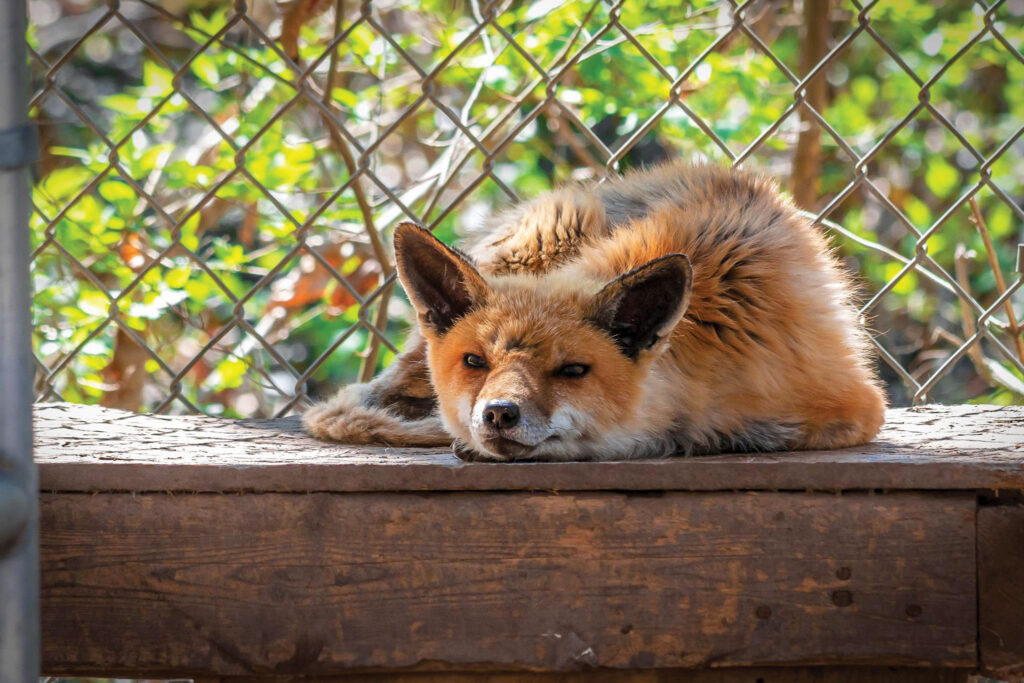
PHOTO COURTESY OF FREE AGAIN WILDLIFE REHABILITATION
Pam wants wild animals to maintain a healthy level of fear. She points out a couple of raccoons who stay huddled at the back of a wire cage when she flips open the door. “These two aren’t social,” she explains, “and that’s good. They’ll be returned to the wild in a couple of days — they need that fear.”
With 43 acres, Pam can release animals on her own property, although that’s still limited due not only to “caring capacity,” but also out of consideration for her neighbors. She gets emotional when she talks about releasing animals.
“It’s like sending your child off to college,” she says. “They run off and climb a tree, return to touch you, then they’re gone. I get in the car and cry all the way home.”
Like Bev, Pam emphasizes the importance of returning animals close to the area where they were found, but she adds that it’s also important to find a wooded area where hunting isn’t allowed (some people allow hunting on private property) that offers nut trees and a water source.
She is also emphatic about making certain a baby animal is truly orphaned before capturing it. “If you aren’t certain, then call one of us,” she suggests, referring to the people who volunteer at rehab centers. “Don’t rush to feed a baby bird. It needs to be hungry so it will call for its mother.”
She believes it’s usually best to let nature care for itself whenever possible. “If a bird falls out of a nest, leave it alone and leave the vicinity so the mother will come for it,” she says. “Rehab centers can care for babies, but not as good as mom.”
When asked why they do this work, both Bev and Pam give similar answers. They explain that humans cause a great deal of harm to wild animals, and they are trying to help balance the equation.
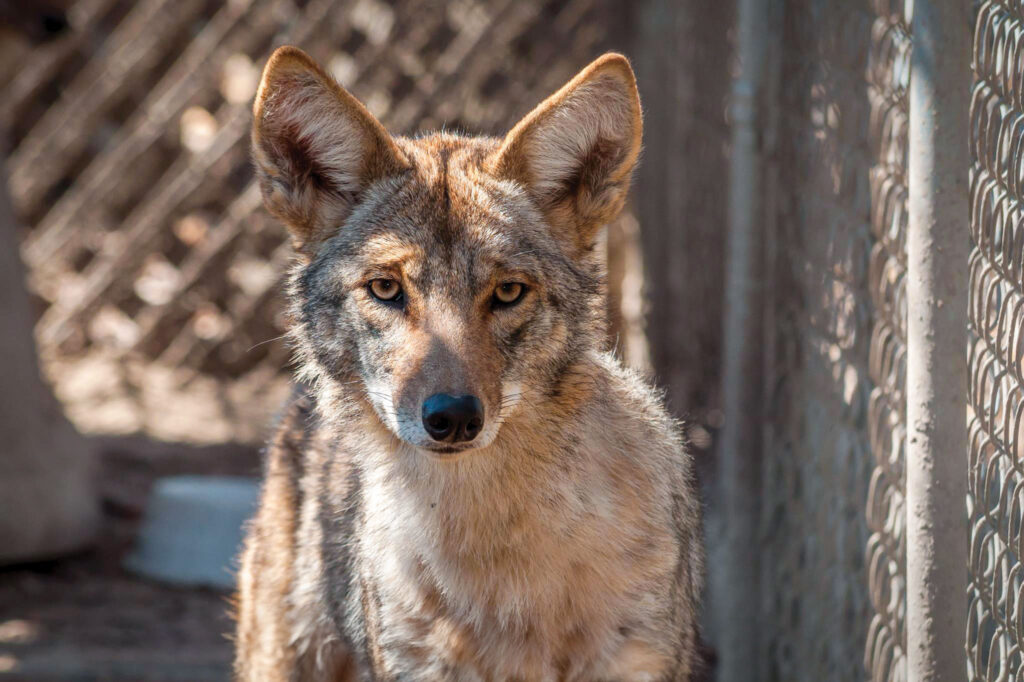
PHOTO COURTESY OF FREE AGAIN WILDLIFE REHABILITATION