
I frequently receive calls and emails about trees that appear diseased or are failing in some way. In many cases, the homeowner is distraught — the tree has been part of their lives for many years or may have even been planted by a family member long ago. It’s important to remember that trees are living things, and like all living things, they have a beginning and an end.
A tree’s lifespan depends on its species, location and the challenges it has faced over the years. Some landscape trees, such as redbud, crabapple or dogwood, are considered old at 50 years. Meanwhile, large shade trees like maple and hackberry can live for more than 100 years. Oaks and bald cypress can live several centuries.
However, according to a survey of certified foresters and arborists, many urban trees struggle to survive beyond 10 years. A USDA Forest Service article found the typical street tree lives between 19 and 28 years.
As community trees face environmental stress and invasive pests, foresters work to replant trees and restore a living canopy overhead. A large, healthy shade tree provides many benefits: cooling the surrounding area, easing the burden on storm sewers and calming traffic. Yes, trees can slow down cars — research shows that people drive slower on tree-lined streets.
As reforesting communities becomes more challenging, protecting mature trees is essential. Beyond environmental benefits, trees offer economic value. A healthy, mature shade tree can boost property value and reduce heating and cooling costs, so it’s important to invest in the health of your mature trees.
Mature trees near homes need regular maintenance. The International Society of Arboriculture (ISA) certifies arborists through training and testing. Visit treesaregood.org to find nearby ISA-certified arborists.
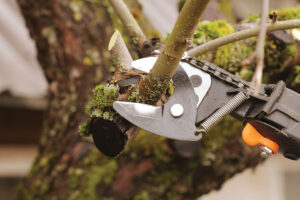
Arborists can have specialties. For evaluating mature trees, an arborist with expertise in tree health assessment and pathology would be best for the job. Often, by the time someone notices something wrong with a tree, it’s too late. Regular inspections by certified arborists can spot a problem before it becomes serious.
When inspecting a tree, arborists assess its growth by examining new leaf and flower buds, leaf size, annual twig growth and dead spots in the canopy. If these indicators align with the known growth patterns of the species, the tree is likely healthy. Arborists also look for abnormalities. Fungal growth, dark spots on the trunk, splits and cavities are signs of internal rot.
A soil test can determine soil pH and nutrient levels. Trees do not often require fertilizer, but a soil test can determine if something is missing. Over time, soil around trees can become compacted. Arborists can relieve soil compaction using vertical tilling and air spading.
Mulching the root zone helps insulate the soil, reducing extreme fluctuations in moisture and temperature, mimicking conditions found on a forest floor. Ideally, mulch should decompose over time, enriching the soil. While turfgrass isn’t the best companion for tree roots, planting shade-loving perennials within the dripline adds texture and color to the landscape.
Let’s do our best to protect our older shade trees. They provide many benefits, and with a little maintenance today, they can continue to serve generations to come.