
You love your older rural house. And you’re eager to be true to its history while upgrading it for modern living. So what’s a homeowner to do? Start with a mindset of appreciation and plan strategically.
“When you live in a historic home, you really embody a part of our nation’s built landscape,” explains Katie Adams of Adams and Adams Construction, an Asheville, N.C.-based renovation and historic preservation company. “When you look at it through that lens, and not just ‘my old, drafty house,’ what an honor to be a part of something so special.”
She and her husband Gus co-own their business and are professionally trained historic preservationists. They’ve found loads of goodies in their 30 years upgrading old homes, including belt buckles, boots, plates and other items found buried in old privies and outhouses.
The stories behind them matter to Katie, Gus and the millions of Americans living in homes built 50 or more years ago — among the key qualifications to be listed on the National Park Service’s National Register of Historic Places. However, modern living matters, too.
Whether you own a century-old farmhouse, a mid-century ranch or something else entirely, here’s what experts say you need to know to upgrade wisely, preserve character and make your home a joy of modern living whose legacy will live on for generations.
Honoring your home’s history
As you begin evaluating renovation options, it’s important to start with some appreciation of what you’re working with. See your house’s strengths and limitations as both an echo from the past and a palette for sketching its next chapter.
“Old buildings are usually constructed very well. They were built at a time when people understood that the quality of their work was a reflection of their character,” points out Melinda McKnight, CEO of Energy Conservation Services in Port Ewen, N.Y.
She and her husband Bill own the Building Performance Institute-accredited company and routinely consult on building science and energy efficiency with homeowners whose properties date as far back as the 1600s.
At the same time, it’s important to recognize there are “some inherent limitations” in older homes. This means modern preferences for features such as open concept and cathedral ceilings might not be a great fit.
“A lot of times, unless [those features are] … done with the guidance of a building scientist, those kind of decisions and improvements can actually cause damage, and they can actually end up creating problems if they’re not done properly,” Melinda says.
The same goes for tossing out old windows or woodwork without realizing those items might be restored and retrofitted to provide the desired energy-efficiency benefits.
“Tuning up and saving your old windows is really one of the biggest things you’ll hear about in preservation,” Gus says.
Katie adds, “It’s a really big deal to protect your fireplace mantels and any of your fireplace surrounds, [and] handrails for your banisters. Those are really art — architecturally precious things.”
Other irreplaceable hardware to keep, fine-tune and treasure include old doorknobs, hinges and locks.
Enhancing energy efficiency
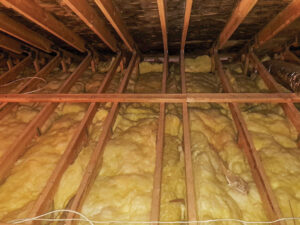
Plenty of home-improvement TV shows suggest modernizing your home with glamorous color palettes and visually striking details. These experts, though, say the biggest bang for your modernizing buck comes from investing in the hidden details that will keep your utility bills lighter.
“Achieving improved comfort and efficiency in buildings requires air sealing and insulating the bottom and top of the building envelope — the area you pay to heat and cool,” Melinda says. “Begin with the attic and basement or crawl space. We don’t generally recommend starting with walls and windows. Our goal is always to address the bottom and the top of the building envelope. That’s usually the low-hanging fruit.”
The reason is in the physics of how air moves through a house. Warm air rises and escapes through the top, while cold air gets pulled into your house through the gaps and leaks located along the bottom.
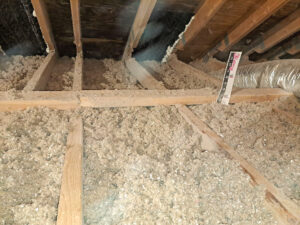
“Only 30% of net heat gain and loss goes out the side of your house,” Gus explains. Otherwise, the cool air goes down and heat rises. That’s the remaining 70%. “So, the two most important things, as far as insulation goes, are insulating the attic and crawl space or basement.”
In addition to using the right type of insulation, evaluate other places where cold air enters or warm air escapes and plug those holes. Rim joists are one such example, Melinda says. These are locations where your house’s wooden frame and wooden floor joists meet.
“Wherever wood meets wood, that’s an air leak,” she points out. “It’s important to air seal and insulate that for a couple of different reasons. The first is that outdoor air getting into conditioned space can create condensation, and potentially [mold]. And, anywhere there’s an air leak, it’s an opportunity for a rodent to make entry.”
For optimal air sealing, Melinda recommends purchasing a can of professional-grade foam, a metal gun that can be used to apply it, plus an acetone-based gun cleaner. Avoid foam kits with a plastic straw that can get clogged and prevent you from using all the foam.
Other popular energy-efficiency upgrades include mini-splits (units that enable you to heat and cool individual rooms in buildings without adequate space to run ductwork according to code) and air sealing (filling air gaps with caulk or one-part foam).
With these strategies in mind, it’s time to step outside and consider how your older house’s exterior could benefit from some modern touches.
Window performance
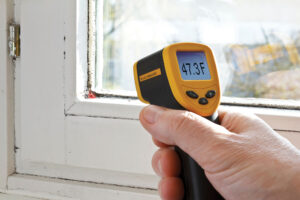 When it comes to energy upgrades, windows often are among the first features homeowners want to replace. But experts say they’re also one of the least cost-effective.
“Windows are expensive, so they have a long payback. They’re not the biggest bang for your buck,” explains Melinda. Unless they’re cracked or leaking, your original windows can often be upgraded.
Replace air sealing and not the glass itself. “A lot of installers will just tuck fiberglass inside the frame, and then they put trim on,” Melinda says. “Use a one-part low-expansion window-and-door foam instead of fiberglass. Then put the trim on. There’ll be a much better result, and you’ll see much less draft.”
Use pulley covers, window felts and door sweeps. These treatments can make a surprising difference in comfort and energy savings.
Install interior storm windows. Products such as Climate Seal are used by the National Park Service to add efficiency in historic houses without changing their appearance. These acrylic interior windows can be custom measured and magnetically affixed.
Exterior investments
When it comes to preserving your house’s history and structural integrity, water management is everything, Melinda says.
“A common issue that we see is gutter downspouts not being run far enough away from the building [and] that water coming back in,” she cautions. A good rule of thumb is to ensure downspouts run at least 8 feet away from your house, if possible.
Also pay attention to your roof. If you spot a leak inside your house, you might think the whole roof needs to go. But you might just need to replace some flashing, which are pieces of metal installed to prevent water entry in your roof.
“If there are roof lines that come together or valleys, you want to have flashing there,” Melinda explains. “You also want to have step flashing along chimneys and stack pipes.”
Know your DIY limits
There are plenty of tasks a handy homeowner can take on, though it’s also essential to know your limits and the risks you might incur without expert help.
“There is a lot that a homeowner can do to improve comfort and efficiency, especially if you’re handy,” Melinda explains. “Air sealing — sealing up gaps, cracks and penetrations — is more important than insulation. For example, air sealing of gaps around plumbing and electrical penetrations. It’s hard to make a mistake with basic air sealing unless you use the wrong material.”
If you decide to take down trim, scrollwork, windows or other items in the house, don’t discard them, these experts say. Keep them safe in a basement or another location, because future homeowners might want to restore those features. Plus, you’ll be keeping those items out of landfills.
For more intensive modernization, such as changing a house’s entire electrical system or major plumbing renovations, it’s imperative to hire a licensed and insured professional, Gus advises. That will help you mitigate the risk of a future house fire or water damage.
Also hire out exterior painting projects to experts who specialize in painting older homes, Katie says. Modern paints can trap moisture, meaning you might end up damaging your home and repainting more often than necessary.
“As a steward of a historic home, treat it kind of like it’s an archaeological site,” Katie concludes. “It’s important to leave the original fabric [of] the home, because you’re caretaking it for now.”
PHOTOS COURTESY OF MELINDA MCKNIGHT, ENERGY CONSERVATION SERVICES