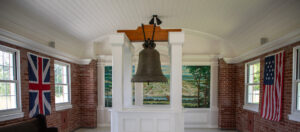

It may be one of the shortest retail seasons in Illinois. For just four hours each fall, Kris Allen opens the doors of her farm store to hundreds of visitors. The store itself, however, isn’t the main draw. The llamas are the main attraction.
For three decades, the shaggy and, frankly, goofy animal has been a fixture on the farm Kris shares with her husband Terry, called K&T Llamas and located on Illinois Electric Cooperative lines just outside of Bluffs.
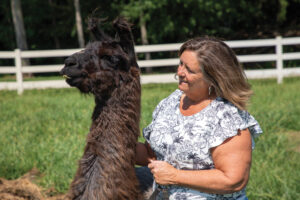
It all started when the Allens took their twin girls on a trip to the Illinois State Fair. And although they didn’t know it at the time, this trip changed the course of the family’s lives. The culprit? Llamas in costume, of course.
“We saw [kids] showing these animals dressed in costume, these big animals, and we thought, if they are that gentle, that looks like something that would be neat for our family,” Kris says.
The couple wanted their girls to learn the responsibilities of taking care of livestock, though the parents would be learning alongside them, because neither Kris nor Terry had any experience either. “So, this was a new adventure for all of us,” she says.
Llamas are domesticated members of the camel family native to South America and are closely related to alpacas. They have been raised for thousands of years, particularly in the Andes Mountains, and are traditionally used as pack animals and for their fiber (fur). Today, they’re also kept as livestock, companion animals and guard animals for sheep and goats.
Back in Illinois, the Allen family embarked on their new adventure with two geldings — who also happened to come with a bottle-fed sheep named Daisy.
The Allen’s daughters began showing llamas throughout the Midwest and for 4-H. At the time, Scott County did not offer a llama project, so the family traveled to Pike County to participate. Showing llamas also introduced the family to a larger, close-knit llama community. Over the years, they met fellow owners from across the U.S.
Today, Kris is helping the next generation experience the animals — this time closer to home. Scott County now offers llamas as a 4-H project, and Kris leases animals to participating children for $10, which is a formality required by 4-H so they can show. Beginning in May, participants visit the farm weekly to work with their llamas.
They practice showmanship and teach the animals to navigate obstacles. Depending on the year, they may also participate in pack or costume classes. Unlike many livestock competitions, the llamas themselves aren’t the focus of the judging.
“I want them to be judged on their ability to interact,” Kris explains. “The more time you spend with your animal, the better they respond to you.”
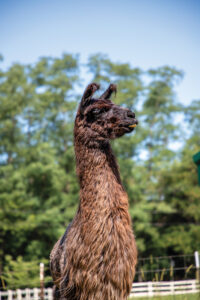
That interaction is important because llamas are quick learners. Kris says they can get bored after doing the same obstacle three or four times. “Once they’ve caught onto it, they’re ready to go on to something else,” she adds.
The Allens currently own 13 llamas, which is much fewer than in the past. At one time, they had as many as 40. Now retired, Kris from banking and Terry from the nearby Reynolds plant, they are gradually downsizing their herd.
“This was my escape, my getaway,” she says. “This part was not work.”
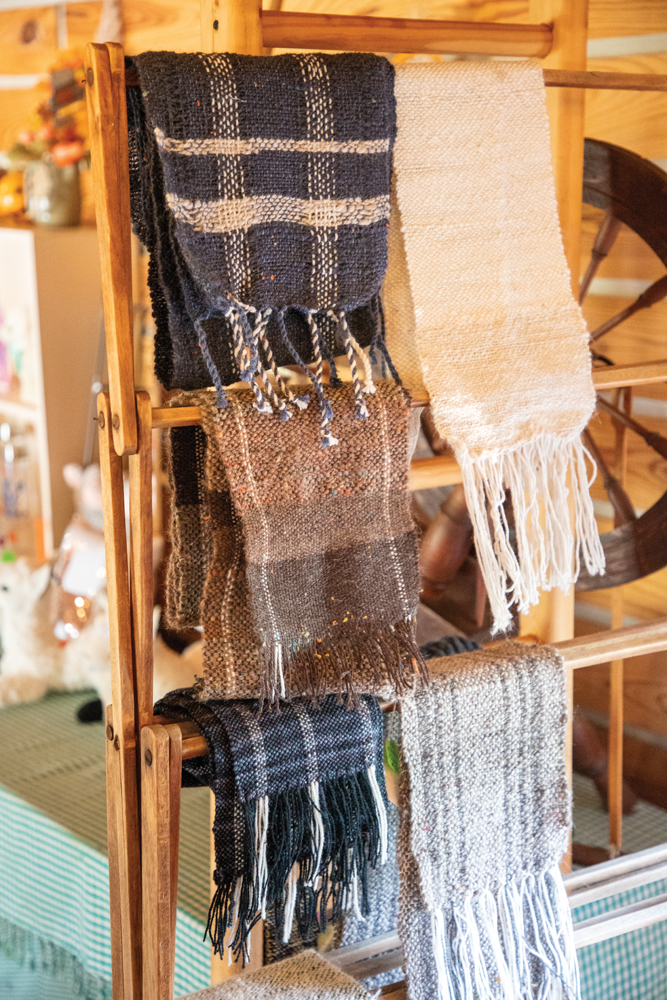
Despite the smaller herd, the animals continue to serve plenty of purposes around the farm. For one, they are used for breeding. Two, they produce fiber, which Kris sends to a mill for processing before spinning and weaving it herself. She turns the fiber into scarves and hand-felted hats sold in her farm store. She also sells the raw fiber.
Then there’s Sebastian. Purchased from Colorado when he was just 6 months old, he has earned the title of the farm’s “PR llama.” Docile and friendly, Sebastian is a crowd pleaser.
“He goes into nursing homes,” Kris says. “He’ll go into the rooms by the beds, and someone who can’t get out who wants to touch and feel one — he’s the llama for that.”
While llamas have a reputation for spitting, Kris says there’s a reason for the behavior. “They spit to protect themselves, just like a dog would bite or bark,” she explains. That protective instinct is especially strong in mothers with young crias — the term for baby llamas.
A place to stay
For some visitors, watching the llamas doesn’t require a day trip or an appointment. They can simply pour a cup of coffee and step onto the porch of the Allen’s rental home.
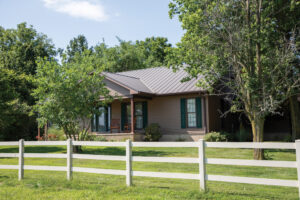
Since 2019, the Allens have operated their Llamafun Guest House on the farm, giving visitors a chance to experience rural life, complete with the llamas grazing just outside the front door.
The house once belonged to Kris’ aunt, who always played a big role on the llama farm and who had dreamed of opening a bed and breakfast but never had the opportunity. After she died in 2018, Kris and Terry purchased her home, which adjoined their farm.
They didn’t want to sell the house, nor did they particularly want someone living so close to them full time. “So, we decided we’d try a guest house,” Kris says.
The property now offers two separate rental spaces — which can be booked through Vrbo — with the upstairs and downstairs available independently. Guests have access to amenities including grills, a fire pit, yard games and a pair of e-bikes available for rent.
The high-speed internet gives guests the choice of truly getting away or bringing the office with them. The farm has fiber-optic internet service, something Kris says has become an asset for visitors who work remotely.
The house also provides a convenient home base for excursions to Springfield and Hannibal, Mo. Or visitors can stay put and enjoy rural living. The Allens offer guests the opportunity to meet the llamas, take photos and, depending on the weather and their schedule, walk one around the farm.
A day on the farm
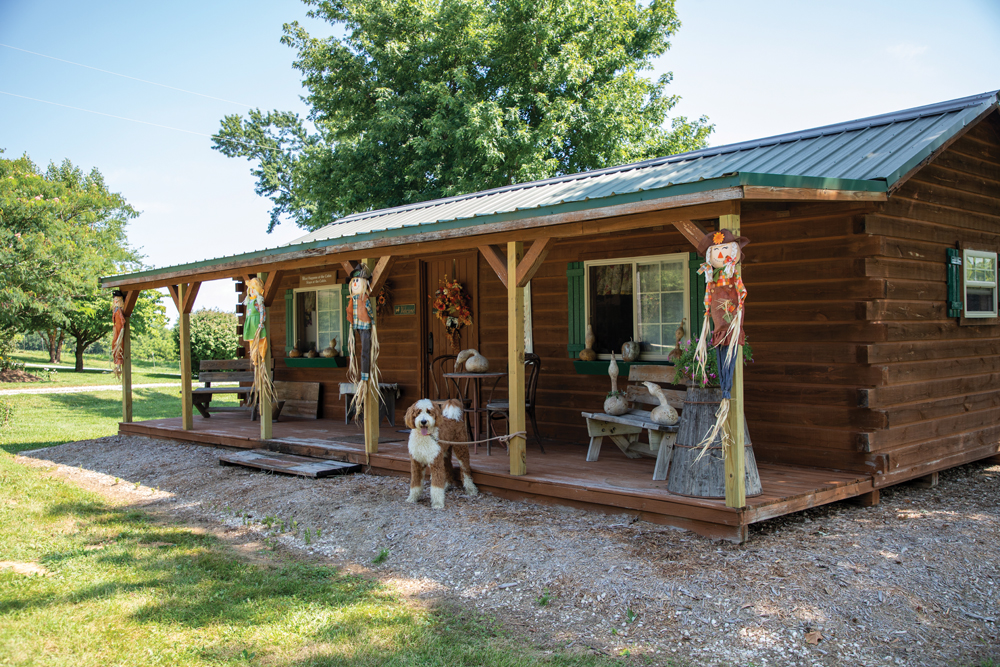
Once a year, the Allens invite the community to visit the farm for their annual open house, or open pasture. It has been a tradition for about 25 years that has drawn as many as 350 people to their farm on a single day. This year’s open house is scheduled from noon to 4 p.m. on Oct. 4.
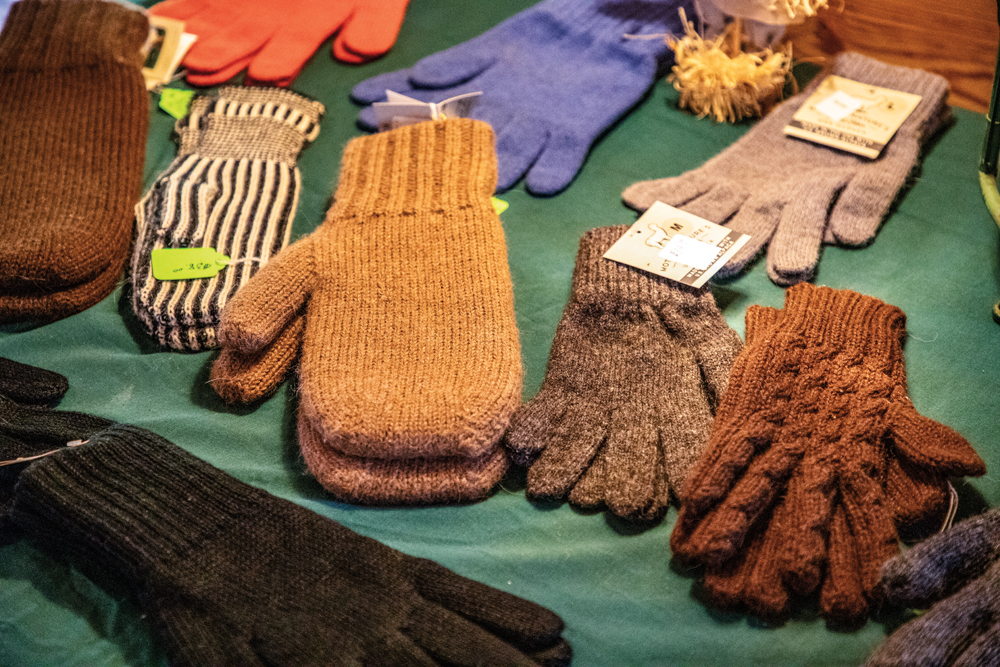
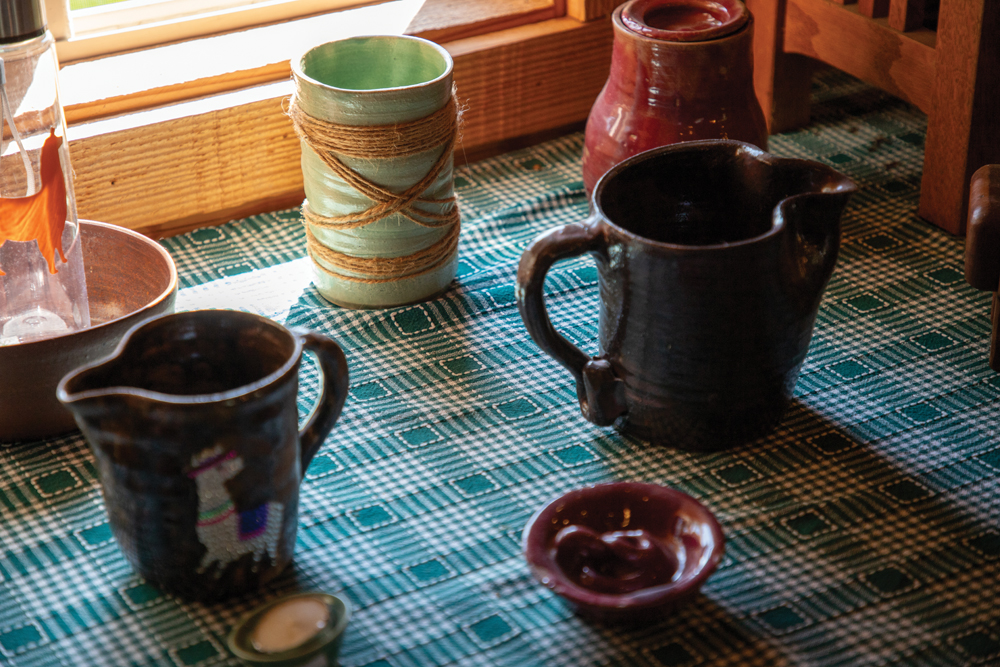
The farm store will be open — the one day a year it is open to the public — and it will be stocked with handmade scarves, pottery and llama Christmas ornaments made by Kris herself. The shop also stocks many other products made from llama fiber from Peru, such as hats, gloves and socks.
During the day, the llamas will be the main attraction. Kris’ 4-H members help visitors lead llamas through a simple obstacle course using two lead ropes — one held by the 4-H member and the other by the guest.
“We had a lady who was 94 do it, and toddlers just learning to walk do it,” Kris says. “It’s been really neat. It’s for all ages.”
The Allens also time their breeding so visitors may get a glimpse of a newborn cria around the time of their open house, although protective mothers and their babies are given some space.
For Kris, some of the most memorable visitors are grandparents who bring their grandchildren. “What a memory maker,” she says.